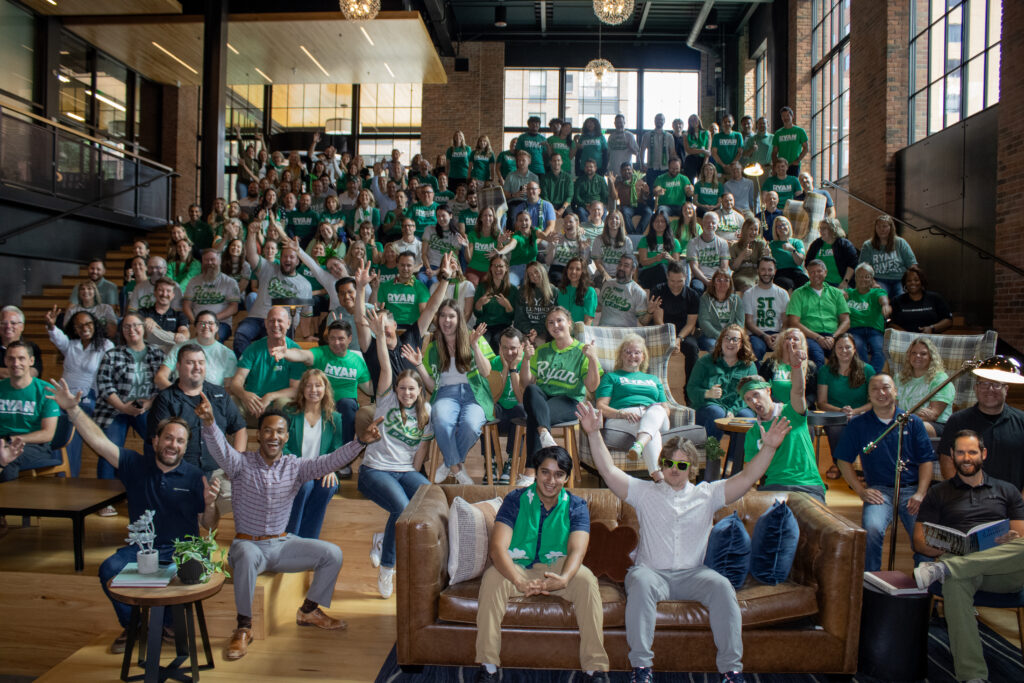
Our commitment to giving back has been woven into the fabric of our culture for decades. Each fall, team members across our offices come together through RyanGivesBack (RGB), a company-wide initiative dedicated to supporting the communities where we live, work and build.
This year, RGB is focused on shelter, one of Ryan’s three giving pillars alongside wellness and education.
Renee Pinkney, Stewardship & Engagement Program Manager as part of our Engagement & Community Team, shares how RyanGivesBack creates meaningful impact for our communities, team members and nonprofit partners.
Q: For those unfamiliar with RyanGivesBack, what is it?
Renee: RGB is a three-month giving campaign focused specifically on supporting our communities. Every Ryan office selects a local spotlight charity to support through fundraising and volunteer efforts in our offices and on our project sites.
Each office’s RyanGivesBack ambassadors select a local nonprofit that aligns with the theme and leads activities supporting that organization throughout the campaign.
This year, our theme is shelter. That can mean housing and emergency shelter services, but it can also include organizations addressing related needs like food insecurity and supportive services. We think about shelter holistically and how it impacts people’s lives beyond simply having a roof over their heads.
Q: Why is RyanGivesBack such an important part of the Ryan culture?
Renee: Giving back to the community has always been important at Ryan. I’ve never known a time when it wasn’t part of who we are. Stewardship is one of our core values, and RGB is one of the ways we bring that value to life. It’s not something separate from our culture. It IS our culture.
Q: How do Ryan teams participate throughout the campaign?
Renee: One of the things that makes RGB special is how creative our teams are. It’s not just about asking people to donate money.
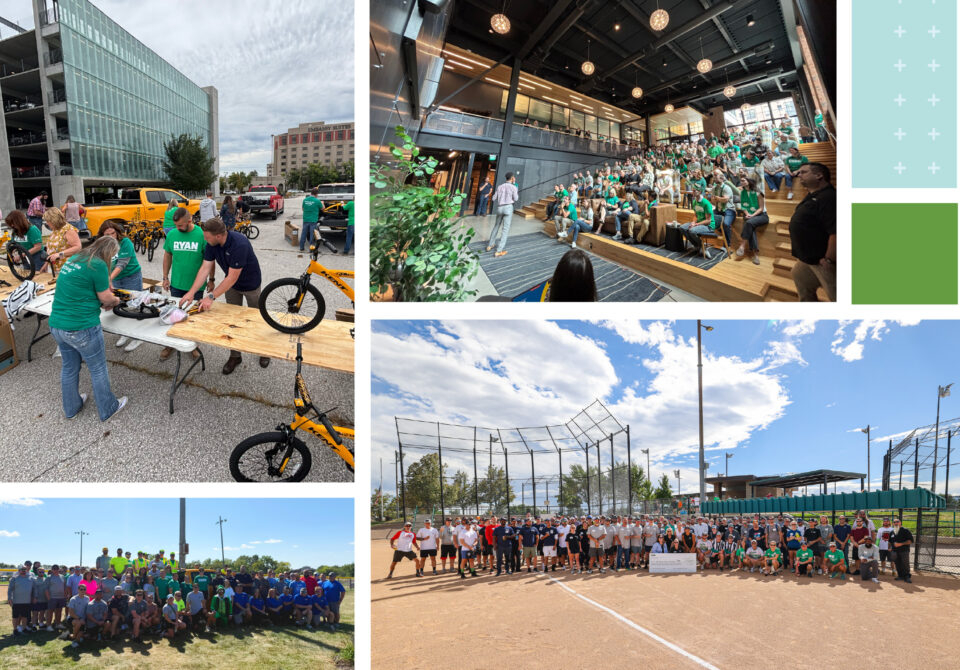
We’ve done everything from karaoke competitions and 5Ks to kickball tournaments, disc golf tournaments, dunk tanks, hot wing eating competitions and other creative fundraising events. Every office puts its own local spin on the campaign. The activities reflect the unique culture of that office and what team members enjoy participating in.
Q: Describe the impact of RGB.
Renee: In 2025, our team members and subcontractors helped raise just shy of $1 million across the company.
Beyond fundraising, we consistently hear from our spotlight charities about the difference the campaign makes. In some cases, Ryan’s support helps fund projects that otherwise wouldn’t have been possible or allows organizations to complete important initiatives they didn’t have funding for.
The impact goes beyond the nonprofits, too. RGB creates opportunities for team members to connect with colleagues they might not normally work with, strengthen relationships with subcontractors and partners and build a stronger sense of community across Ryan, both at the office and across our project sites.
Q: What’s new about RyanGivesBack this year?
Renee: This year, we’re creating more alignment across the company by focusing on a single giving pillar: shelter.
The shared focus has helped team members see stronger connections between the causes being supported across our offices and understand how local efforts contribute to a larger collective impact.
We also kicked off the campaign with a national event featuring Jasmine Crowe-Houston, founder and CEO of Goodr, a sustainable waste management and hunger-relief technology company. Her story challenged team members to think more broadly about shelter and inspired teams as they launched their local campaigns.
Q: Why does Ryan invest so much time and energy into community involvement?
Renee: We are building actual buildings in our communities every day, and it means a lot to us to have an impact that goes beyond constructing a building and moving on. We want to create a lasting impact in the places where our job sites and offices are located and inspire people to see Ryan as a company that cares, because we do.
Q: How does community involvement enhance the employee experience at Ryan?
Renee: Community engagement gives team members meaningful opportunities to come together around a shared purpose.
Teams often volunteer together as part of team-building activities, creating experiences that are rewarding both personally and professionally. Ryan also matches employee donations dollar-for-dollar and provides team members with 20 hours of paid volunteer time each year.
Those programs reinforce that Ryan values what our team members value and supports the causes that matter most to them.
Q: What role does leadership play in RyanGivesBack?
Renee: Our leaders are actively involved throughout the campaign.
Executives make an effort to participate in local RGB activities across the company. Whether they’re serving lunch, calling bingo, attending events or even singing karaoke, they show up and participate alongside team members.
Their involvement reinforces that giving back isn’t just a program. It’s a company-wide commitment shared at every level of the organization.
Q: What would you want prospective team members to know about Ryan’s commitment to giving back?
Renee: Giving back isn’t something special that we do. It’s simply part of who we are.
As our team members continue this year’s RyanGivesBack campaign, the goal remains the same: to make a meaningful difference in the communities we serve. Through volunteerism, fundraising and a shared commitment to stewardship, our teams, partners and leaders are helping create lasting impact where it matters most.